

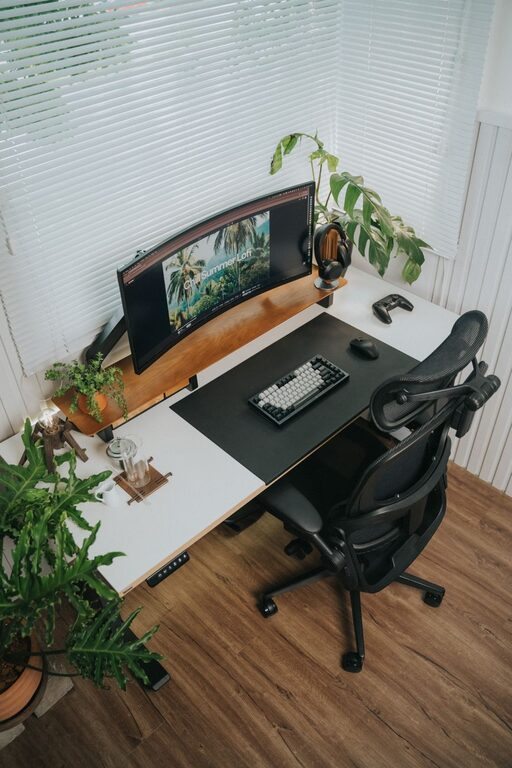
Creating a desk setup that promotes both focus and comfort can significantly improve your productivity and well-being. Whether you work from home, at an office, or study, your workspace plays a crucial role in how effectively you complete tasks. In this post, we’ll explore practical tips to help you design a desk setup that supports concentration and physical comfort throughout the day.
Why Desk Setup Matters
Your desk is more than just a surface to place your laptop or papers. It’s a key area that influences your posture, mood, and ability to focus. An ergonomic, well-organized workspace can reduce discomfort and distractions, allowing you to work efficiently and with less fatigue.
Choose the Right Desk and Chair
Desk Height and Size
The height of your desk should allow you to sit comfortably with your arms at about a 90-degree angle when typing or writing. A standard desk height is usually between 28 to 30 inches, but adjustable desks or standing desks offer the flexibility to find your optimal position.
Consider the size of your desk as well. It should be spacious enough to accommodate your computer, keyboard, mouse, and any other essential items without feeling cluttered. Having extra space for notes or other tools can improve workflow.
Ergonomic Chair
Your chair should support your lower back and encourage good posture. Look for an adjustable chair with lumbar support, height adjustment, and comfortable padding. Sitting with your feet flat on the floor and your back supported helps prevent strain during long work sessions.
Position Your Screen at Eye Level
A common cause of neck and eye strain is improper monitor placement. Position your screen so that the top of the monitor is at or slightly below eye level. This helps maintain a neutral neck position and reduces the need to look down or up for extended periods.
If you use a laptop, consider investing in a laptop stand or external monitor to adjust its height. Pair this with an external keyboard and mouse to maintain ergonomics.
Optimize Lighting
Good lighting minimizes eye strain and helps maintain alertness.
– Natural light: Position your desk near a window if possible, to benefit from natural daylight.
– Task lighting: Use a desk lamp to provide focused light on your work area. Adjustable lamps help you direct light where it’s needed most.
– Avoid glare: Arrange your screen and lighting to prevent reflections and glare, which can cause discomfort and distraction.
Organize Your Workspace for Minimal Distractions
A cluttered desk can lead to a cluttered mind. Keeping your workspace tidy can improve focus.
– Declutter regularly: Remove unnecessary items from your desk daily.
– Use organizers: Desk trays, drawer dividers, and cable management tools keep essentials within reach but out of the way.
– Limit personal items: While some personal touches are nice, too many can distract you from work.
Incorporate Comfort-Enhancing Accessories
Small additions to your setup can make a big difference.
– Keyboard and mouse: Choose ergonomically designed devices to reduce strain on your hands and wrists.
– Footrest: A footrest can improve circulation and posture if your feet don’t comfortably reach the floor.
– Wrist support: Consider wrist pads for your keyboard and mouse to reduce pressure during typing.
Create a Routine for Desk Maintenance and Breaks
Keeping your desk setup effective means caring for it regularly.
– Daily reset: Spend a few minutes at the end of each day organizing your desk.
– Regular breaks: Follow the 20-20-20 rule to rest your eyes (every 20 minutes, look at something 20 feet away for 20 seconds).
– Stretch and move: Stand or stretch periodically to relieve tension and improve circulation.
Personalize for Motivation
While keeping distractions minimal, personalizing your space can boost your mood and motivation.
– Add a plant for a touch of nature and improved air quality.
– Use calming colors or artwork that inspire you.
– Play soft background music or ambient sounds if it helps your focus.
Final Thoughts
A desk setup tailored to your comfort and focus needs can transform your work or study experience. By paying attention to ergonomics, lighting, organization, and personal touches, you create a workspace that supports your health and productivity. Start making small changes today and enjoy the benefits of a well-designed desk setup.